

Alert triggered: what happens next?
Once an alert has been triggered, there is an unavoidable delay before help arrives. It is important to anticipate this critical period: protecting yourself and others, remaining calm, and following procedures will help to limit risks until professionals arrive on the scene.
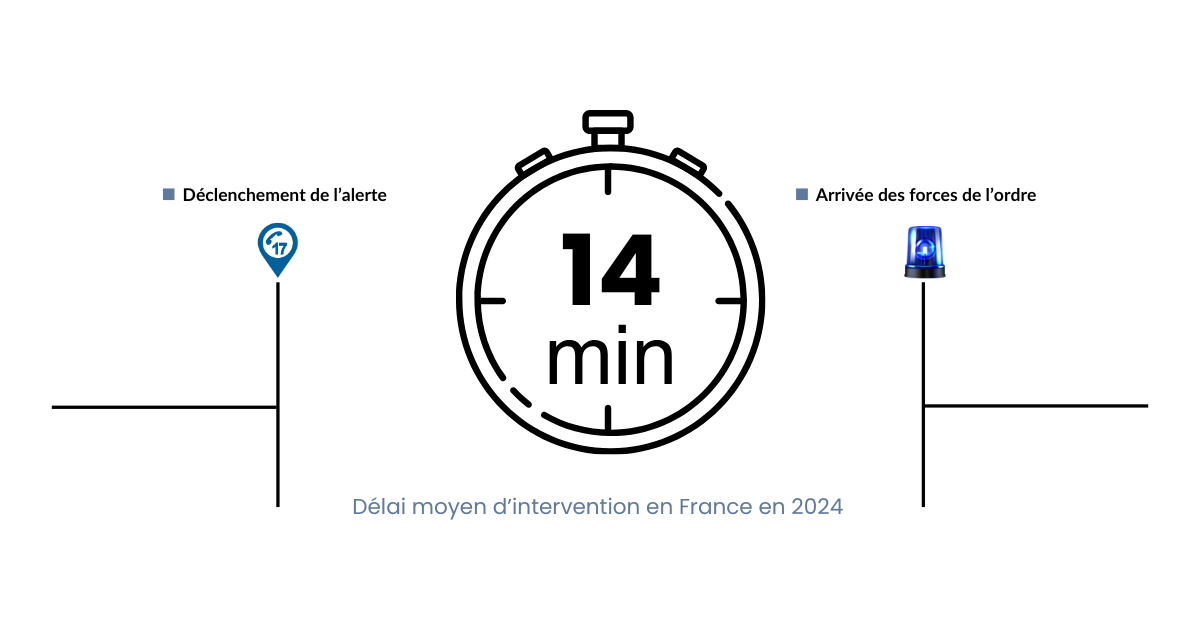
In the event of an emergency, what happens before the arrival of emergency services or law enforcement?
When a crisis situation arises in the workplace (assault, violent incident, or major disturbance), raising the alarm is an essential step. However, between this critical moment and the actual arrival of emergency services or law enforcement, there is an unavoidable delay. Understanding this average response time and knowing how to act during this interval is essential to limiting risks and protecting those present.
Endless minutes
Variable but unavoidable response times
The arrival time of emergency services or law enforcement varies depending on several factors: the nature of the incident, geographical location, availability of teams, traffic conditions, and the prioritization of ongoing interventions.
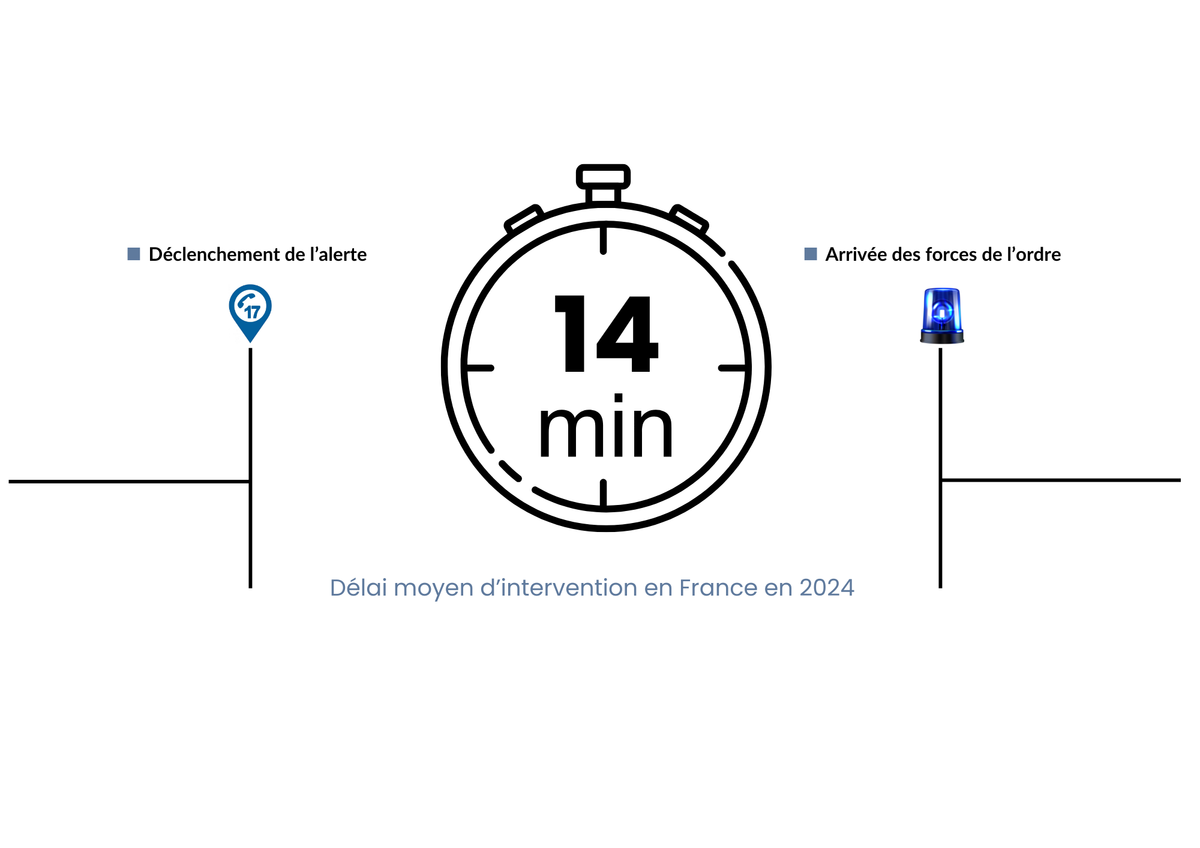
On average, in urban areas, emergency services can arrive within 8 and 15 minutes after the alert is triggered. For law enforcement, this delay is generally between 10 and 20 minutes, sometimes longer in rural areas or during peak periods. These delays do not reflect a lack of responsiveness, but rather the operational reality of emergency services.
This period of time, which is often underestimated, is nevertheless a critical period during which those present at the scene must deal with the situation on their own.
The critical minutes: a decisive moment
Between the alert and the arrival of emergency services, the situation can change very quickly. Stress, panic, misunderstanding, or inappropriate reactions can increase the risks. That is why these minutes must be anticipated and prepared for.
The goal is not to replace intervention professionals, but to save time, prevent the situation from worsening, and protect those exposed. Managing this period of time is based on simple but essential principles: protect yourself, protect others, and alert others effectively.
What should people do on site?
Before help arrives, the top priority is people's safety. It is essential to remain calm, limit unnecessary movement, and avoid direct confrontation whenever possible. Keeping your distance from the source of danger, staying in a safe space, or verbally de-escalating the situation can help reduce tensions.
It is also important to follow the internal procedures established by the organization: evacuation instructions, alert protocols, roles of safety officers or management. Clear and reassuring communication helps to prevent panic and maintain a minimum level of control over the situation.
Anticipate to better manage waiting times
The key to effectively managing this waiting time lies in anticipation. Team training, raising awareness of appropriate behaviors, providing accessible and non-violent solutions: all these elements enable employees to feel empowered when faced with a critical situation.
Simply knowing what to do, how to react, and who to turn to greatly enhances the feeling of security. This helps transform a difficult situation into one that is under control, serving to protect people.
Better prepare for the first few minutes
The first few minutes after an alert is triggered are often the most critical. While the arrival of emergency services is essential, managing the interval before they arrive is just as crucial.
By preparing teams for these situations and implementing appropriate measures, organizations strengthen their ability to deal with the unexpected, while effectively protecting their employees until professionals arrive.

FAQ