

The First Few Minutes of a Crisis: Why Are They Crucial?
The first few minutes of an emergency are critical. Preparation, training, procedures, and alert systems enable professionals to respond more effectively to an assault, a threat, or an incident while awaiting the arrival of emergency responders.

The Challenge of the First Few Minutes
An altercation that escalates, an assault, a threat, or any other critical incident can occur at any time in a public space. Whether it’s a business, government office, healthcare facility, retail store, or community setting—no environment is completely immune.
In situations like this, the first few minutes are often critical. However, they are also the moments when those present are most vulnerable. The element of surprise, stress, a lack of information, or difficulty making a quick decision can complicate the handling of the event.
Plan Ahead to Cope Better: Instincts That Are Developed Over Time
Time is often a decisive factor
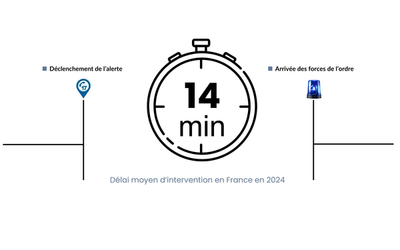
When an incident occurs, emergency responders or law enforcement are generally not on the scene. The first people to respond are therefore the employees, staff members, or colleagues who are directly confronted with the situation.
During those first few minutes, several key actions can make all the difference:
- Raise the alarm;
- Protect those present;
- Identify the nature of the hazard;
- Follow the instructions provided;
- Facilitate emergency response efforts.
The sooner these actions are taken, the more the consequences can be limited. Conversely, every minute lost can increase the risks to those affected.
No one is naturally prepared
Contrary to popular belief, it is rare for a person to react perfectly when taken by surprise. In a critical situation, the brain can go into a state of shock. This natural reaction can lead to a temporary loss of bearings, as well as difficulty analyzing the situation or making a decision.
That is precisely why preparation is essential. Crisis management professionals know this: in stressful situations, we don't improvise. We apply what we have learned, practiced, and internalized beforehand.
Situations that are more common than you might think
Violence and tension in settings that serve the public are a well-documented reality. According to Dares data reported by the INRS, nearly three-quarters of the workforce works in direct contact with the public. Among them, 44% report experiencing tense situations in their interactions with users, customers, or patients. Furthermore, 15% of employees report having been subjected to verbal abuse in the past twelve months, and 2% report having been subjected to physical or sexual assault.
These figures serve as a reminder that critical situations do not affect only certain so-called “high-risk” sectors. They can affect all organizations that serve the public.
Prepare Rather Than Suffer
Being prepared doesn't mean living in constant anxiety. It simply means anticipating what might happen so that you can respond more effectively when the time comes.
This preparation is based on several elements:
- Risk identification;
- Team training;
- Simple procedures that everyone is familiar with;
- Accessible alert systems;
- Regular exercise.
The INRS also notes that employers are required to assess these risks and implement appropriate preventive measures to protect employees' physical and mental health.
A Collective Responsibility
The first few minutes of a critical situation should never be taken lightly. They are often the moment when everything is decided: protecting, alerting, securing, and organizing the response.
No organization can guarantee that an incident will never occur. However, every organization can take steps to ensure that its employees are better prepared to deal with one.
Because when a critical situation arises, it’s not the resources available several kilometers away that matter most. It’s the instincts, tools, and decisions that are immediately available. And it’s often in those first few minutes that everyone’s safety is ensured.

FAQ
We answer your questions
Related Articles
Alert triggered: what happens next?
Once an alert has been triggered, there is an unavoidable delay before help arrives. It is important to anticipate this critical period: protecting yourself and others, remaining calm, and following procedures will help to limit risks until professionals arrive on the scene.

Conflict management: the right reflexes
Employees who interact with the public are exposed to stress and aggression. Training in conflict management helps prevent risks, protect teams, improve well-being and service quality, and fulfill employer obligations.

Employee Safety: What Are an Employer’s Obligations?
Employee safety is a legal obligation that goes beyond accident prevention. Identifying risks, anticipating stress, and implementing appropriate measures help protect teams and improve the quality of life at work.